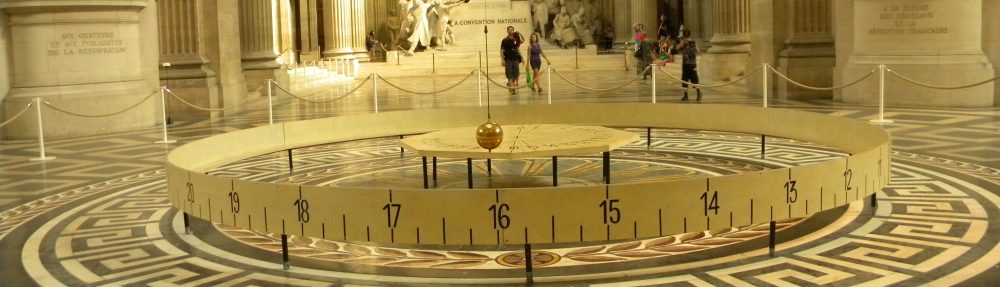
About my Cover Photos

“After dinner, the weather being warm, we went into the garden, & drank thea under the shade of some apple trees […] he told me, he was just in the same situation, as when formerly, the notion of gravitation came into his mind. Why should that apple always descend perpendicularly to the ground, thought he to himself: occasion’d by the fall of an apple, as he sat in a contemplative mood.”
William Stukeley, Memoirs of Sir Isaac Newton’s Life (1752),
Royal Society MS/142
The story goes, as far as popular culture is concerned, that Sir Isaac Newton got his inspiration for his theory of gravity when an apple fell on his head, as he was gazing at nature under an apple tree.
But there is a catch: in the accounts reported by Newton himself and relayed by some of his acquaintances, the apple fell, but not on his head . A detail you might say, and you’d be right! But that’s not the catch!

Although it is likely that an anecdote involving an apple did happen, as often told by the protagonist himself, it is extremely unlikely that an “Eureka” moment is enough for anyone, not even for the Greatest Scientific Mind of all times, to come up with the fundamentals of science.
Maybe he found the apple example simple and appealing, maybe the anecdote amusing to tell. But one thing is true: Science is never made of single observations of anything. Newton must have spent hours, days, even years, observing falling objects over and over again. Taking precise measurements. Making calculations. Inventing a whole new field of mathematics.
Now here’s another detail that won’t cross many people’s minds: a falling object falls once. And quick. And then you have to pick it up.

But, attach it to a string, and as it starts falling, the string pulls on it, causing it to swing from one side over to the other, slowing its movement down, until it stops, and then starts falling again in the opposite direction, and the cycle repeats over and over. How convenient. Newton must have spent hours experimenting with such a contraption. The pendulum: first studied by another great mind of science, Galileo Galilei1, was indeed instrumental in testing and validating the principles laid down in Philosophiæ Naturalis Principia Mathematica.
Now, at this point, you might be wondering: where am I going with this story? Why am I even interested in the pendulum — much less making it the title of this blog? Maybe because it symbolizes the instrument that started it all? The how and why Science, as we know it today began?
Maybe!
But both Galilei and Newton also looked and gazed at the starry night, the planets, and the moon. They knew perfectly well the motion of the errant stars. And as it turns out, the shapes drawn by these wanderers are sufficient inputs to fully formulate the sought after principles. In fact, they must have played an even more significant role for Newton than the relatively imprecise pendulum2.
So why not choose as a first cover photo a starry night under the arguably catchier title “Corpora Caelestia”?
The reason is rather simple: I can hold a pendulum in my hand.
I can touch it, feel it, and easily make my own out of readily household objects. I can use the one I make to take my own measurements, do my own calculations and see Science unfolds with my own eyes. It not only symbolizes how modern Science started for humanity, but also how Science can start for anyone curious to learn about the workings of the Universe.
And there is much more to this simple contraption. I will finish this article with this fact that has always blown my mind, and continues to fascinate me every time I think about it:
The motion of the simple pendulum is described by what scientists call “harmonic oscillations”, a smooth repeating motion. As it turns out, without entering into the mathematical details, the motion of any object, whether oscillating, moving in a circle, or tracing the outline of Mona Lisa, can be reproduced by the combined motion of several (or maybe infinite) individual harmonic oscillators, each vibrating at its own frequency and amplitude3.
The animation below4 illustrates how two harmonic oscillators can work together to outline a circle (left). Tweak the amplitudes, and you get an ellipse (middle), add a third one and you already get a much more complex shape (right).

The fascinating part, is that this geometric curiosity generalizes beyond the tracing of a dot on a screen: indeed, the motion of the harmonic oscillator is the mathematical building block that also describes sound (origin of the name “harmonic”), light, the flow of temperature in a conducting rod, and much more. Even the fundamental particles that constitute the stuff we and all animate or inanimate beings are made of. We are but a collection of vibrating stuff, which at the fundamental level, at the infinitely small, vibrate to the same dance as the rocking of a simple pendulum.
And yet, somehow, stemming from simplicity arises complexity: a consciousness with the ability to self-reflect and to ponder on its own functioning, that of the Universe which made it, and occasionally on a simple pendulum.
- Galilei is credited with establishing several properties of the pendulum, among which: periodicity, the property that the time of an oscillation (period) stays the same in time; isochronism, the property that the period does not depend on the amplitude of oscillations; and the property that the period depends on the length and not on the weight of the bob. ↩︎
- Arguably, the major contribution of the simple pendulum in Newton’s comprehension of gravity, was to demonstrate, that the gravity we feel at Earth’s surface, which pulls the apple downwards towards the center of the Earth, extends far enough to be the same force pulling on the Moon and keeping it in orbit. ↩︎
- Frequency counts the number of oscillations per unit of time, and amplitude describes how far the oscillation extends. There is a third parameter I didn’t mention called the phase, which describes the initial state of the oscillator. It’s not very relevant when dealing with a single oscillator, but it plays a significant role when combining several oscillators as it describes their relative “synchronization”. ↩︎
- Much better animations and deeper explanations of the mathematical origins of this fact are made by
 3Blue1Brown in his series about Fourier Transforms. ↩︎